

Arrival in Kathmandu (Nepal), meeting, acquaintance. Today it is very important to hand over our passports for the processing of a group Tibetan visa, other visas (including individual) to China on the Nepal-Tibet border are not valid. During our acclimatization route, the visa will be prepared and we will take it to the border with passports. After lunch we go to buy the missing equipment and other small things, and in the evening there will be an organized dinner, after which we pack our bags for our trip (extra luggage can be left at the hotel)

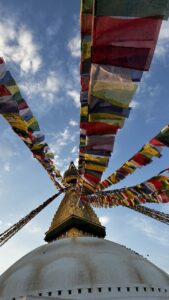
Kora around Kailash is at quite serious altitudes, so we are gently acclimatizing and preparing for altitude in the Langtang area. It is called Small Tibet because of the proximity to it, most of the inhabitants are tamangs and sherpas, in fact ethnic Tibetans. The task for today is to move to the village of Dunche with stops for rest and lunch. The road passes through an unusually picturesque mountain serpentine among green hills and rice terraces, along the Trichuli Ganga mountain river. The constantly changing scenery behind the window will not let you be bored for a minute, views of waterfalls, mountains, cliffs and gorges will glimmer behind the window. We will pass through many villages and small towns, observing the daily life of the Nepalese people. At the entrance to the village we will see the first snow-white hats of the mountain system Langtang Himal.
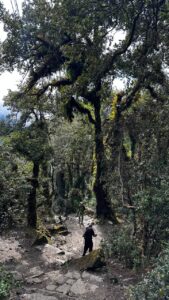


From Dunche along the river goes a narrow path, surrounded by rhododendrons and other exotic plants. We gradually gain altitude, crossing the river several times on suspension bridges. Often the path will be replaced by steps, leading us through thick and wild forest thickets. Nepalese nature will surprise you with the vibrant colors of the jungle, the noisy rivers, the stormy waterfalls, we will walk through a stunning century-old forest full of squirting cycads and lush tropical vegetation. The snow caps of the Langtang Valley mountains will seem closer and closer.
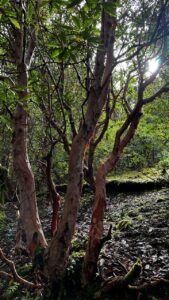


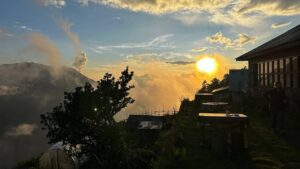
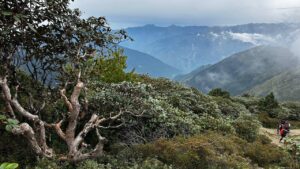
Today is the most interesting day in terms of height and beauty. Passing through a small section of true fairytale forest with mighty and majestic Himalayan pines, we will ascend to the most beautiful plateau, from where we will open up three huge mountain massifs!
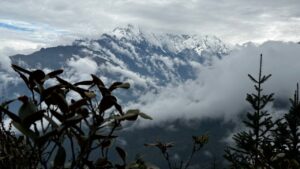

This amazing panorama consists of famous mountain peaks: Annapurna, Manaslu, Langtang Himal, Ganesh Himal, mountains of Tibet. Seeing so many legendary mountains at once is very rare, let’s test our luck on the weather. These species will accompany us all the way to the lakes of Gosaekunda, until we enter the steep gorge. There are many lakes in the area, but the most important three: Saraswati Kund, Bhairab Kund and Gosaikund. The Lake Gosaikund, on whose shore we will stop for the night, is one of the places of worship in Hinduism. According to legend, it was created by the god Shiva himself, when he wanted to drink clean water. In shape, the lake resembles the trident of Shiva.

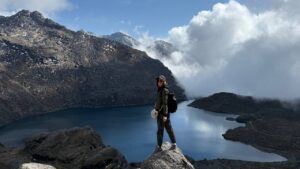


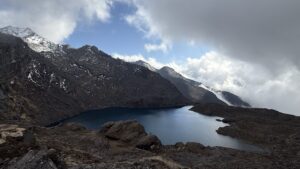

We meet the sunrise at Lake Goschikod and if you wish, you can bathe in the purest mountain cold water, thereby cleaning from energy «dirt». After breakfast we go back down to the village of Chandanvari.

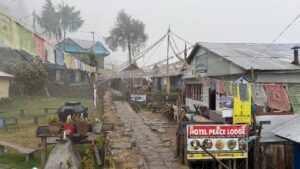
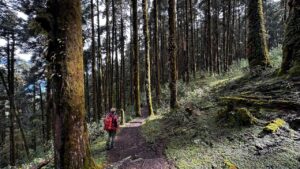
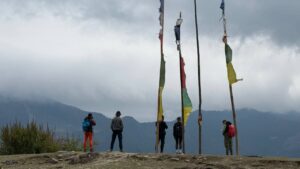


Today is the end of our tracking day. On this day we will walk in the area of 10 km, the road will go down through alpine meadows, pastures, mountain ridges, forests and small villages down to the river and if you are lucky we can see the langurs (local species of black-tailed monkeys) We pass a few beautiful gorges and by evening we reach the atmospheric Nepalese village of Syabrubesi, where handicrafts are developed. The acclimatization track is finished, we settle in the guest house and fully relax.
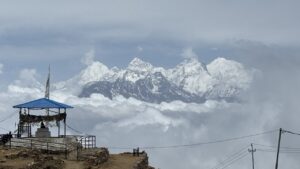
In the morning from Syabrubesi we drive to the border of Nepal with Tibet surrounded by mountain peaks and rice terraces. After the necessary formalities at the border, we continue our way up about 2 hours, after which we stop for a night in the atmospheric city of Kerung. We’re having a nice Chinese dinner tonight.
Today we drive to the highest mountain plateau in the world, the very place that is called «roof of the world», but first we will pass a few checkpoints and climb to the cult place of the Tibetans — a cave where went into nirvana legendary guru and meditation master Milarepa.

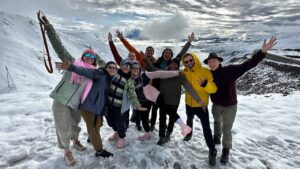
We will continue our journey along the plateau, and during the day we will be able to observe not only the Himalayan eight-thousanders, but also the unique inhabitants of the animal world of the Tibetan plateau: hares, jackals, eagles and of course the treasure of Tibet — yaks.


Today we quickly visit the famous mountain pass Kyedrong (5,170 meters) make some memorable pictures and continue our way to the town of Saga, where we will stop for the night.
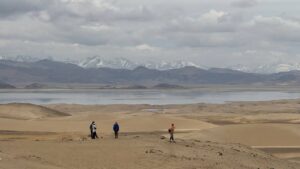


We continue our journey to Kailash on the 145-kilometre high-speed road that runs along the Tibet Plateau from Saga to the sacred lake of Manasarovar. Our way to the lake will pass through the high mountain passes of Laksang, Znamlungla and Jongna, from each of which there are amazing panoramas on the plateau. After lunch we descend a little lower, our way will go along the bank of the majestic river Brahmaputra, which in India becomes Ganga. Its total length is more than 2900 km! We must stop at the place where the surrounding peaks of the Himalayas open in all their beauty.


Then through a picturesque gorge, crossing the pass, we go back to the large Tibetan plateau. From here you can see the sacred lake Manasarovar. We stay overnight in the village of Darchen.

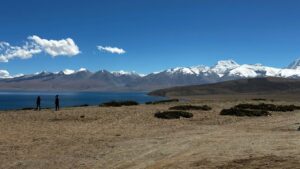
We dedicate the first half of the day to walks along Lake Manasarovar. From Sanskrit it is translated as «lake of consciousness». Thousands of pilgrims used to come here to bathe in its waters and cleanse themselves from their sins. Swimming in lakes is now forbidden — for the Tibetans and especially the followers of Bon — bathing in a lake is considered to be an act of disrespect. We visit a rock where there is a very small but revered Chiu Gompa, or Bird Monastery, where Guru Padmasabava, also known as Guru Rimpoché, once meditated


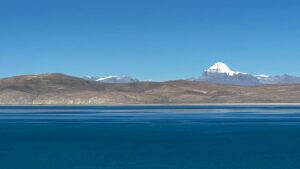
Thousand years ago, it was here that the famous yogi, poet and Buddhist teacher Milarepa liked to come. But the most sacred and revered place here is a cave in the rock where Guru Rinpoche spent the last 7 years of his life on earth. After we visit the sacred lake Rakshas Tal — where the spirits rest and bother them no need, besides despite the proximity to Manassarovar, Rakshas in contrast to it is straw. The lakes are full of sacred meanings and images, each pilgrim finds and accepts «his» in them. In the evening we return to the town of Darchen, from where Kora itself will start around Kailass.

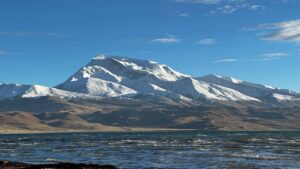

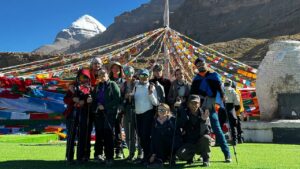


Today begins the most important part of our journey — the sacred Kora around Kaylash, a total length of 56 km. The Kora is a ritual tour of the mountain. It is believed that one external Kora cleanses from all sins of one life, and Kora in full moon counts for 3. If the Kora is finished ten times, then pilgrims can be freed from the torments of hell during five hundred rebirths. We will go our Kora in the Buddhist tradition, on the Sun direction(clockwise) around Kailash.


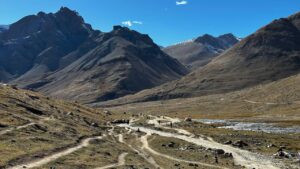
The first kilometers of the trail runs along the river LhaChu. In the valley of the river there is a magnificent canyon of red rocks with colorful layers. We pass through its huge rocks and rocky peaks. Without much delay, we go further, to the place of Chakcal Gang. It is from here that you can see the Western Entrance (nubgo) to Mount Kaylash. It is believed that only the chosen ones can enter the Great Underworld, which lies within the Sacred Mountain. If you see the multicolored rays emanating from the walls of the mountain and pointing to the mysterious entrance, this is your sign and the way to the land of Mahatham. By evening we will arrive at Drira Puk, where we will spend the night with a magnificent view of North Face of Kailash.
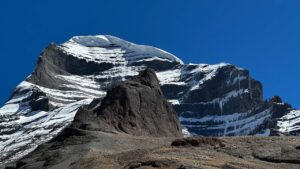
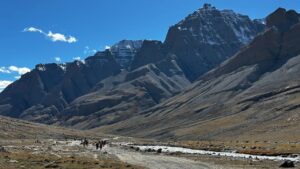


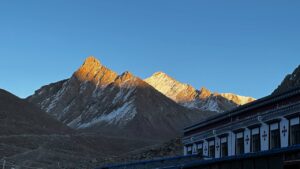
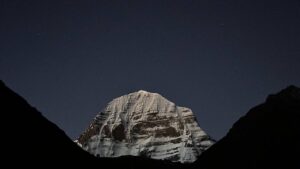
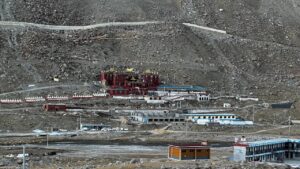
Today is the most important day for which many come to Tibet. We will try to approach close to the almost vertical wall of Kailas — North Face of the Mountain. Due to the fact that there is almost no snow, it has an unusually severe dark gray face. Day of practices and meditations before the Karma pass (if access is closed, there will be a spare day)
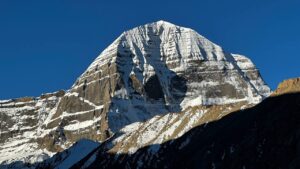

Continue our Kora. Today is the most busy day in terms of altitude and landmarks. We will see the Boundary of Heaven, where not so long ago the Tibetans of religion Bon (shamanism) «sent» in the last path the bodies of those who died, cut them into pieces and fed to a vultures, returning to nature and naturally completing the life cycle. We have to climb a very serious altitude and cross the Dolma La pass. The transition is long enough, but technically the mountain pass does not so difficult, except for the height! Just in case and for peace of mind, you can purchase oxygen cartridges in advance in Darchen.
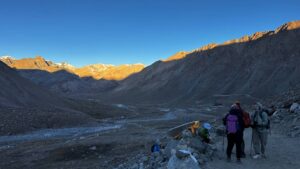

The trail leads uphill and takes us to the sky cemetery of Shivah Tsal, where pilgrims drop their clothes as a sign of ending the old life and beginning of new — on Dolma La Pass (5,630m). The pass is the main goal of the outer Kora, the road to it is marked by prayer flags, on the top stands a huge stone and many believe that the goddess Dolma lives in the rock. On the path that leads us to the pass, we will see on both sides two mountains whose silhouettes from the height are very similar to the sacred symbol of OM. The mountain on the right has a connection with the upper worlds. The elevation on the left — with the lower ones. This mountain is very important for pilgrims.
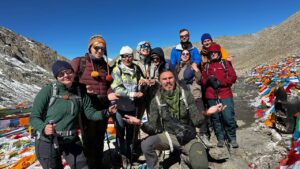

The descent from the pass is steep and in case of icing can be dangerous places. Here we will help the «kittens» — soft cats-ice cubes, which are not a problem to buy or rent in Darchen.
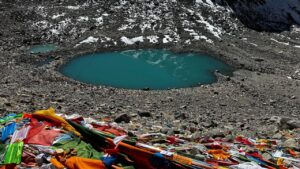

Descending to 5,200 in the valley of Laham Chu, we will have lunch in a tent cafe and continue our way. Serious heights and major difficulties are behind us, but we have 10 kilometers ahead with beautiful scenery and a view of the East face of Kailash. In the evening we come to Zutul Puk, where the monastery of Zurtul Phug was built, where once meditated master Milarepa.


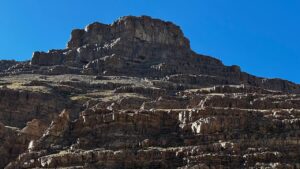
The final 8 km and 3 hours of Kora. They pass quickly and easily, going smoothly down to the altitude to which we have long adapted. In Darchen we’ll see the Southern face, which means that Kora is finished with all of us and congratulations, remind: Kora in full moon equals three Koras. We have lunch in a Tibetan cafe and drive 40 kilometers to the sacred lakes of Manasarovar and Rakshas Tal. With gratitude in the heart, we say goodbye to the sacred place, take some photos and continue our way, because we have to drive 500 km to Saga, where we will arrive by evening.
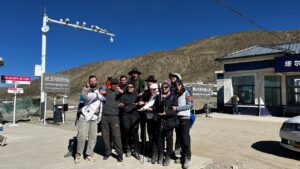
We start our way back towards Kathmandu. In a few hours we will be in a small village called Tingri. In good weather from its surroundings you can see the peaks of Everest and Macalu. Then the road passes through several mountain passes. We will stop at the picturesque Lake Peiku-Tso with a magnificent panoramic view on eight thousand meters of Shisha Pangma 8,012 m. For overnight stay in the guest house in the city of Kerung, where we were already at the beginning of our journey.
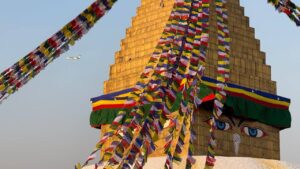

Crossing the border with Nepal, moving to Kathmandu with lunch and rest stops
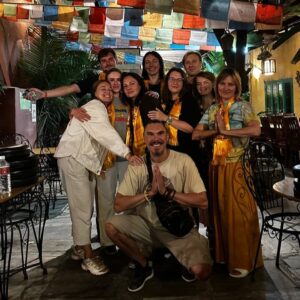
Flight home, but we recommend staying for 1-2 days in Kathmandu to immerse yourself in the age-old culture of hindu-buddism